Featured

Virtual Field Trips in the Classroom

The world is a book and those who do not travel read only one page.

Saint Augustine

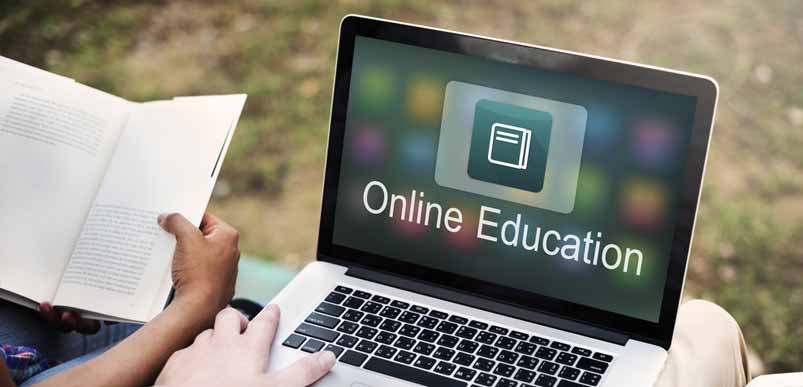
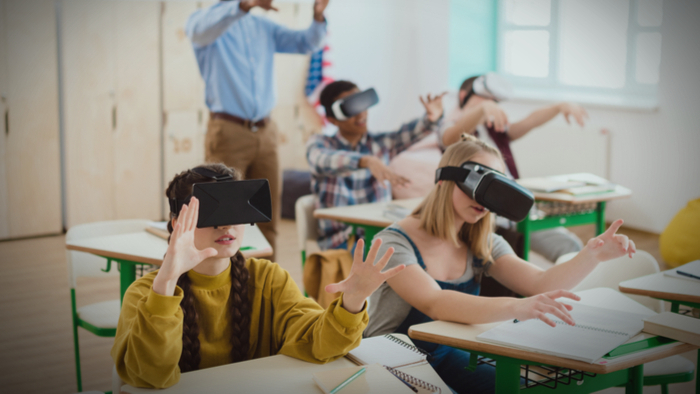
Virtual field trips are a new and interesting way to engage students in classes. These trips are essentially an online experience, sometimes through a video, slideshow, or 3-D model, to another place in the world. From trips to museums, monuments, countries, and even the past, the opportunities are endless for teachers to find applications to their lessons. There are numerous benefits to having access to these virtual field trips, all of which provide a compelling argument for teachers to start incorporating them into their classrooms. 

These virtual trips are easily accessible to everybody. It doesn’t matter how near or far the classroom is from the destination, everybody can have the same experience. Students in Arizona, Tokyo, and Melbourne can all visit the Metropolitan Museum of Art at the same time with an equal chance of seeing all of the same pieces of art. Students who live in rural areas can learn about cities and their biggest attractions by walking through its street using Google Earth. On top of its accessibility, these trips do not cost money. Students will not be left behind on these trips because of their economic stability. Any classroom with a computer can ensure every student in the class has equal access to the same opportunity to learn about and experience these places. 

Students enjoy breaking up their routine with something new and exciting. Virtual field trips are a great way to get students energized to learn. No matter what content area or class, there is always a field trip that can be discovered and taken that connects into a lesson. When teachers put in the extra effort to connect their lesson with a real-world application or example, students are much more willing to learn. In fact, they become excited to see how this topic could possibly be taken outside of the classroom. This is the prime time to show students that what they learn in our schools is not abstract or irrelevant to “real life” but that this information plays crucial roles in our world. The more applicable the trip is to the students’ interests, the more impact that it will leave on them and the more they will truly learn. 

Virtual field trips are an underused resource in our classrooms. There is an infinite world of possibilities and places to take our students whenever we desire. It is our responsibility to create opportunities in our classrooms for our students to see the connections between academics and the outside world. Students will not remember every single lesson when they leave our classrooms, but they will remember the ones that made them feel curious, excited, and passionate. They will remember the teachers who put in the extra work to make the class interesting and their content applicable.


Featured

Becoming Part of the Global Community

Peace is a culture that we create by putting it in the curriculum for young people, through creating this next generation where young people get a chance to go across borders, across cultures, to learn more about each other’s life, to create a global community, learn about opportunities for helping others. It’s investing in peace and tolerance training, ending the gap between rich and poor.

Craig Kielburger

Despite the popular saying, ignorance is not bliss. As educators, our eternal mission is to continuously provide opportunities for our students to learn. This learning does not have to be limited to a specific content area or curriculum; in fact, schools would be incredibly boring if teachers kept their lessons strictly to one topic each lesson. Just as educators defend the importance of their classes, we need to advocate for global perspectives. Students need exposure to different cultures, communities, and lifestyles so they can be informed members of our global society. 

Students need to learn about areas outside of where they live. Different parts of the globe live completely different lives in every aspect. Students should have endless chances to see and learn about how people from different areas live so that they can compare their experiences with others. Students living in North America versus students living in Africa or Australia all have different stories to tell about the places they’ve been, the things they have seen, and the people they have met. As individuals, our stories should be shared with others so that everyone can see life from different perspectives. If we never give our students the chance to see where people in Southern Asia live or the food that people in Antarctica rely on, we are denying them crucial social knowledge. 

The importance of exposure to different communities goes far beyond knowing facts about different places across the world. When we teach our students about different cultures, we are teaching them about respect, tolerance, and acceptance of people who seem different. We are teaching our students to go into situations with an open mind without judging somebody based on their race, religion, or culture. When we introduce our students to new places and groups of people, we always need to remind them that prejudice has no place in our lives. We need to be able to respect everybody and that respect can grow from knowledge and understanding. Instead of criticizing or mocking another culture’s rituals or customs simply because they seem so different from ours, our students should be encouraged to put themselves into that community and try to imagine living there. 

Technology is the best tool that can be leveraged to inform our students of the world around them. Any question can be answered, every picture displayed, and thousands of videos played whenever students are encouraged to search. There is genuinely an endless amount of research on communities across the globe that is available online. Technology is our greatest tool as educators to open the door to another culture. Google Earth is a great place to start where students can see the geographical location of the country or city they are learning about. Google Earth can also connect students with online pages that contain more information about specific landmarks or buildings. Online penpal services are an amazing way to personally connect students from different places together. Being able to directly communicate with somebody their own age who is living in this unfamiliar place creates a link between the two communities. Students can see how similar they are to people on the other side of the world! 

It is crucial that students are exposed to communities and cultures that differ from their own. Ethnocentricism is the belief that one’s own culture is better than any other. It is a detrimental mindset to carry as it prevents appreciation and respect for the differences between people across the globe. This is a mindset that we, as educators, need to prevent our students from developing. We must strive to teach about cultures and communities as exciting, interesting, and amazing parts of our world that uniquely contribute to our global society.

Featured

Fulfilling Social Needs in Social Isolation

Distance is just a test to see how far love can travel.

Unknown

During this period of social isolation, everyone has been struggling with changes in their daily lives. Our routines have been disrupted and replaced by uncertainty, fear, and isolation from our friends and family. For children and teenagers, this time has been incredibly difficult to fully understand and cope with. As educators, we are responsible for continuing to teach our students by using virtual experiences in place of our classrooms. But we still need to consider how we can help our students fulfill their social needs while continuing to practice social distancing. 

One way to help students stay connected is to use video chat as part of our instruction whenever possible. With so many programs offering free services at this time, teachers should take advantage of the opportunity to see and talk to their students. Even through a computer screen, the ability to see each other’s faces can help students and teachers feel connected. Teachers can continue to have class discussions about their content but also about other topics. For example, teachers can use these platforms to give students a chance to express their feelings and concerns about what is happening and try to help them work through this difficult time. Many students may feel better knowing that their peers are having the same issues. Most students won’t be talking to anybody outside of their immediate circle of friends without teachers stepping in to bring classes back together. Having even a small sense of normalcy in seeing their teachers and classmates can help students deal with the physical distance. 

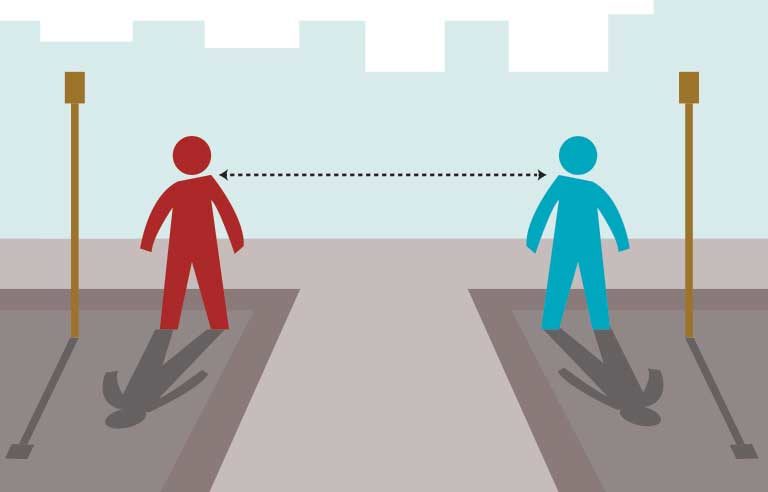
Educators should also be reminding students of safe ways to have different types of social interactions. Since we live in an age of technology, students can use that to stay connected to their friends and family members. Using FaceTime, Skype, or other video calls with their friends is a great way to keep communication open. Another important point to stress is that students can still go outside (younger ones may be accompanied by parents). They can go on walks and have interactions with people as long as they keep a safe social distance between all participants. Students who live in the same neighborhoods can still see each other while being mindful of their health. Even sitting in their front yards and having a friendly conversation with neighbors can help fulfill social needs. 

Even though our society is advocating for “social isolation”, this term doesn’t mean cutting ourselves off from the world. It is more important than ever for our students to have people to lean on in this uncertain time. Teachers must encourage their students to reach out to friends and family through technology or from a safe outdoor distance. Whenever possible, we should be enabling safe social interactions so that we can continue to support our students. Although everyone has been affected by this tumultuous period, our students may not be equipped with the same capacity to understand why so many restrictions are being placed on them. We need to help them find healthy ways to handle any stress, anxiety, or worry they hold and continue to be a guiding hand in their lives. Above all else, we must put our students needs in the forefront of our minds.

Featured

12 Month School Calendar in the US?

Teachers are solar powered. They recharge during the summer!

Unknown

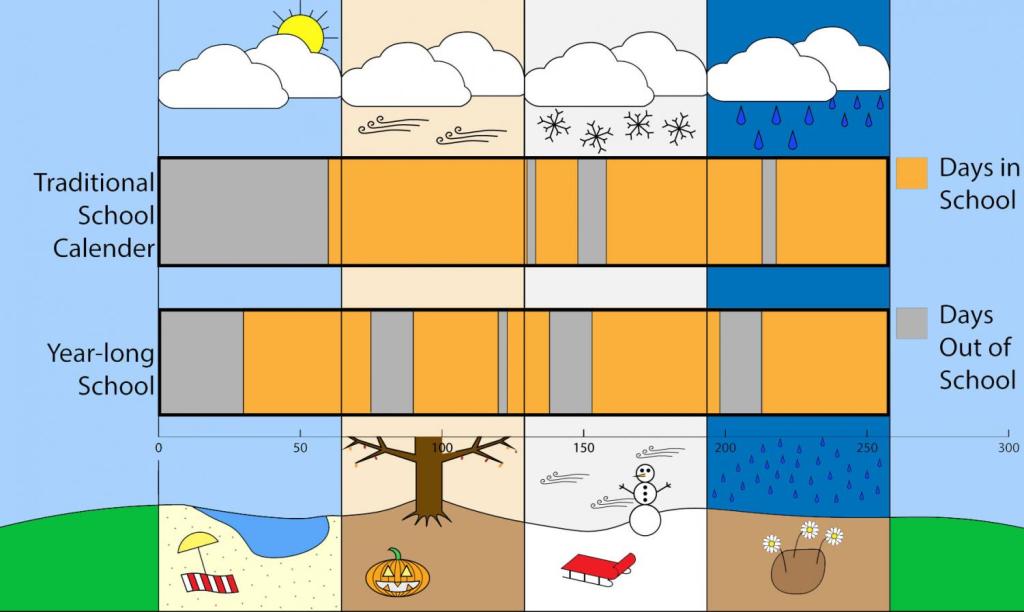
Teachers are tasked with the impossible job of choosing the most important information to teach their students in a limited time frame. Setting up an effective school calendar is one of the most important steps in creating a successful educational year. American schools run on a nine-month system from September to June, but many other countries have yearlong schools. Many educators have differing opinions on the best school year calendar but I believe maintaining our nine-month schedule is the most effective. 

There are advantages to having school all year long. In this design, students and staff are given more frequent breaks throughout the year. This helps to break the year into more manageable chunks of time. Students always have another break to look forward to and teachers can chunk their lesson planning in accordance with the different sections of the year. The lack of a three month break also eliminates the need for a “back-to-school-review” period. Teachers can maintain a constant pace without worrying about playing catch up for all the information that was lost over the summer break. However, with these positives come a list of drawbacks.

Summer break is a time period that is crucial to many students’ personal lives. Children need time dedicated to playing and exploring their world, especially younger children. Summer allows for children to go to different camps and explore their passions. Instead of focusing on academic work, they participate in sports, science experiments, and creative activities. Older students also use this time to work in summer jobs. Teenagers like to feel financially independent (to an extent) and have the freedom to buy clothes, games, or food on their own. Summer jobs also provide an experience that contributes to a stronger college resume. Families are able to take extended vacations or spend time at a summer house. Teachers are given a break from the stressful pace of their jobs and spend time fulfilling their own personal needs. When schools start in the fall, students and staff feel recharged to tackle another year. Without a summer break, all of these things would be lost. It is unfair to take away such unique experiences from our students when there is no other time for them to participate. 

While I see the benefits of a year-round school calendar, I think Summer break is too important to give up. It offers students, staff, and their families a special time to focus on activities unrelated to school and academics. Our school years are packed full of activities: study groups, sports, clubs, homework. Students need a designated time where they are given a chance to focus on personal goals. Teachers need a period to relax and untangle themselves from their jobs. Although a twelve-month school year presents its own set of benefits, I don’t think it would fit into the American culture. There is plenty of time in our nine-month calendar to create endless moments of meaningful learning without sacrificing summer break.

Featured

What Happens When Schools Must Physically Close?


In an era of technology, many districts are lucky to have alternative options for educating their students when schools must physically close. With the increasing prevalence of 1:1 devices, it is easier than ever to ensure students can learn remotely. When schools are forced to close for an unplanned yet extended amount of time, this period of inactivity can be incredibly detrimental to the school year. From a few days to a few weeks, teachers and students need every minute of class time to try and cover all of the material for the year. When unexpected breaks are forced to occur, it is imperative that schools find ways to keep their students engaged and on track. Through the use of devices and online resources, schools can implement online lessons and assignments to fill in the gap.

Any schools that already have 1:1 devices have the easiest path to providing digital learning. Teachers can push out lessons, videos, readings, and assignments through their usua online portal, whether its Google Classroom or another system. Students can complete assignments and hand them in online. They can watch videos or powerpoints and take notes on the concepts and ideas and then work through additional assignments to further their understanding on the topic. Schools can also use the hundreds of websites and programs to support their students’ online experience. Youtube, Khan Academy, Quizlet, and EdPuzzle are just a few of the tools that teachers can easily and effectively use to help the online experience. The only concern for these schools is if they do not have any content filter installed or available for the devices once they leave school grounds. While this could be a large issue, the immediate solution is to rely on parents or guardians to monitor the students’ use of the device. 

Some schools face a much more complex situation. For example, schools that do not have the resources to provide every student with a device to take home. In this case, schools could try and reach out to the community or other districts to see if there were any resources that could be shared. However, this would likely not be enough to supplement entire schools. Additionally, students who may typically use public places, like libraries, to access computers or internet would not be able to go to these places as travel is discouraged during times of inclement weather or health concerns. In these cases, there is no clear solution to how to provide digital learning to every student. 

It is clear that while online learning is an ideal way to keep schools functioning when their physical doors must shut, its practical implementation is not easy or even feasible in some places. In districts that have already started to incorporate digital learning and devices, it is a natural transition to bring classes fully online for a short time. Of course, not every class will easily translate to an online experience but it is an effective short term measure. Unfortunately in many districts, online learning cannot replace physical instruction due to a lack of resources in the schools and its community. Hopefully, as the technological wave continues more schools will have equal access to devices and online resources as it truly is an irreplaceable tool for any school.

Featured

Becoming Responsible Digital Citizens

Good citizenship in person needs to flow over into good citizenship online. It has a lot of the same principles: respect, being kind, and meeting expectations.

Jill Felty

Digital citizenship is an ever-growing responsibility for everyone living in the twenty-first century. At first, I was unfamiliar with this term. However, when I looked up its definition, I knew exactly what it was. I believe many people understand the idea of digital citizenship without knowing the specific term. Essentially, digital citizenship is using the internet in a responsible and respectful way. There are many different aspects to this concept including online safety, cyberbullying, and understanding what and how to use our plethora of online resources effectively. It is imperative that our students are equipped with this knowledge starting at a young age so that they can safely and effectively use the internet throughout their school career and onwards. 

I believe the most important aspect of digital citizenship is learning how to be safe while online, especially for children and teenagers. It is easy to fall into the belief that being behind a screen is safe since there is no immediate physical danger. However, strangers online can be just as dangerous as strangers in person. With the aspect of anonymity, it is easy to believe that you are getting to know somebody but there is no guarantee that the other person is being truthful or has good intentions. It is important for students to recognize the danger in exposing personal information online where hundreds or thousands of strangers can view, interact, or steal it. Students should be taught how to protect their information online, through privacy settings or simply not posting information, and also how to recognize an unsafe situation and notify the adults around them. With younger students, it’s easy to stress the importance of stranger danger even while online. For older students, we need to help them recognize when it is and isn’t appropriate to communicate with people online, as well as how to protect themselves when they do choose to use social media.

Cyberbullying is an extension of online safety. Students may not understand the impact that words sent through a screen can have compared to in-person action. Anything that would not be acceptable to say or do to somebody in person is still not acceptable to do online. Students are at great risk of cyberbullying through social media, especially as they grow older and start to become bolder. Twitter, Instagram, Tiktok, and dozens of other platforms are full of different forms of cyberbullying that are often played off as jokes. While teachers and administrators cannot control what our students may choose to post on personal accounts, we can teach them to recognize harmful words or behavior and give them a reason to pause before posting. Just as students are encouraged to speak out if they see or experience any type of bullying in person, they should be taught to do the same online. 

Digital literacy is an equally important aspect of digital citizenship. Students must be taught how to navigate and understand the articles, studies, news reports, and everything in between. With the internet, students have access to millions of different websites, but not all of them will be credible, applicable, or beneficial. Students need to learn how to filter through different resources to find the best ones for their specific needs. When assigning research tasks, teachers should help students choose websites or databases that are appropriate for academic work. If students are learning about a controversial or debatable topic, teachers can use this opportunity to teach the difference between biased and unbiased websites and how both can be beneficial in certain situations. By teaching our students the skills to filter a database search from 30,000 results to 100 results, we are empowering their online navigational skills. 

Digital citizenship is an ongoing skill that students will continue to cultivate even when they leave our schools. It is our responsibility to provide them with the foundational abilities to keep themselves safe, post and interact kindly and responsibly, and discover worthwhile resources that suit their needs. Schools have always had the overarching goal of teaching their students how to become impactful citizens in their communities, states, and countries. In our expanding online society, we now need to extend that knowledge to become responsible global citizens.

Featured

Incorporating Movement In The Classroom

It is impossible to educate the mind without involving the body. Learning is thinking and movement integrated.

Dr. Maria Montessori

I often find myself wondering how I ever managed to sit in class after class for seven straight hours without feeling like I was going to jump out of my seat. When I sat through lecture after lecture, sometimes I felt like there was no end in sight. I can vividly remember the times in middle and high school where my teachers designed lessons that kept us moving around the room and out of our seats. While sometimes the activity felt a bit pointless, many times my entire class was appreciative of the reprieve from motionless lessons. There is no end to the importance of incorporating movement into classrooms whenever applicable. Further, it is even more necessary to incorporate movement with the growing use of devices in schools. 

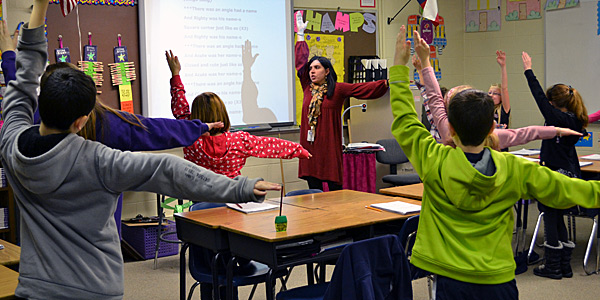
Allowing students the freedom to move around their classroom has numerous benefits. There is growing research that supports the idea that movement improves cognitive functions. Associating gestures with new material, and constantly reinforcing the use of the gestures, is known to help improve memory. For instance, my pre-calculus teacher helped us remember what different functions looked like by shaping her arms to match the graphs. It was a moment of both education and laughter; in fact, there are several pictures of my classmates standing together to form sine and cosine graphs because it was a funny and memorable lesson. Such a simple act of just moving our arms in different directions was impactful. When learning is enjoyable, students remember better. 

Movement is also a great way to develop and support social skills. When students sit at their seats and listen to a lecture, there is little communication between peers. It is easy to create lessons that link group work and discussions to moving around the classroom. It is simple to develop four corners, each with a different discussion question and have students walk around the room talking about their answers or opinions. Perhaps each student will write their remarks on a large piece of paper that will later be displayed. Another easy incorporation is to plant different pieces of information around the classroom that the students must collect and collectively work to fit them all together. Even keeping it as simple as requiring students to walk about the room and solve different math or chemistry equations allows collaboration. 

As devices spread throughout classrooms, it is easier than ever for students to stay glued to their seats. Physical movement is pushed aside to incorporate technology instead. However, there is no reason that the two cannot work together to create an even more effective classroom. Students can bring their devices along with them as they move throughout the room, perhaps researching a different topic at each center. If the teacher wishes to have even more interconnection, they can require that the students record a video with their device that involves dance, demonstration of a math problem, reenactment of a scene, or a historical event. Anything that gets students on their feet and using their environment and available resources is worth incorporating into lessons. 

Above all else, movement breaks up the monotonous routine of sitting, taking notes, reading books, or typing essays. Even a five-minute break of walking around the classroom can be enough to help students refocus their energy and prepare for the rest of their day. If movement can be used to help students memorize and comprehend new information, it is only logical to make use of it. When teachers put the extra effort into designing a lesson that is outside of the norm, they are ensuring their students will remember that day.

Featured

Should 1:1 Devices Leave With Students

The real power of interactive technologies is that they let us learn in ways that aren’t otherwise possible or practical.

David Lassner

As more schools start to provide their students with 1:1 devices, the responsibility of keeping all students on an equal ground remains. I believe that students should be able to bring home their 1:1 devices, with certain requirements. There is no doubt that having 1:1 devices in the classroom is an amazing tool. But, when students leave the building they may lose access to all of the assignments, textbooks, and apps they have been using all day long. I recognize that allowing the students to take their devices home with them requires a lot of trust in many different regards. However, allowing students to have access to their device at home is far more beneficial than any potential issues. 

One of the biggest concerns about allowing students to take devices home is the possibility of them breaking or misplacing it. It can be expensive to provide 1:1 devices for an entire student population, and having to constantly repair or replace broken devices is not ideal. While in the building, it is easier for the staff to watch how the students are treating their devices and try to prevent any major damages. Once the device leaves the school, it is up to the student to be mindful. But just as students watch over their notebooks, wallets, keys, and phones, they are able to watch out for their school devices. Accidents are always possible; in fact, I’ve seen many educators break the technology in their own classroom while trying to make it work. If the school implements a policy that encourages students to be extra careful with their school devices, I do not think there would be any more incidents outside of school than inside. Perhaps the students have to agree that if their device is damaged a certain amount of times while outside of school, say two or three, then they are responsible for repairing it themselves. But truly, most students will treat this device as if it is their own (which it essentially is) and try to avoid any destruction of it. 

An equally large concern is how to ensure the devices are used appropriately while off school grounds. Before last year, I believed that schools could only block websites and monitor devices while they were connected to the school’s WiFi. But when my sister’s high school invested in 1:1 Chromebooks and allowed them to bring them home, I learned about many different ways they continuously watch how the laptops are used. The Chromebooks all have blocks put onto any websites or downloads that the school doesn’t want their students accessing. This is built into the Chromebooks so it isn’t reliant on what network they are connected to. Additionally, this school uses a program called Gaggle that is essentially an upgraded web filter. This program, which is compatible with Google, Microsoft, and Canvas, will flag any concerning words or phrases on the students’ devices and send a report to the administration to follow-up. For example, if a student were to type an email or into a document saying, “I’m bringing alcohol”, Gaggle would flag it and send an alert to the school so they would be able to reach out to the student and investigate. These are just a few ways that schools are completely capable of keeping their students safe on their devices while they are off school grounds. 

When students can bring their devices home with them, their education flows into their home life more smoothly. It ensures that all students can complete any online assignments, access their textbooks, and have a line of communication with their teachers. It is imperative to give our students equal access to all resources and providing 1:1 devices at home helps in that mission. As long as schools are capable of providing the necessary safety features, there is no reason to stop students from taking their devices home with them.

Featured

The Paperless Classroom

Technology opens the door to the world. It’s up to us to walk through it in a meaningful and respectful way.

Unknown

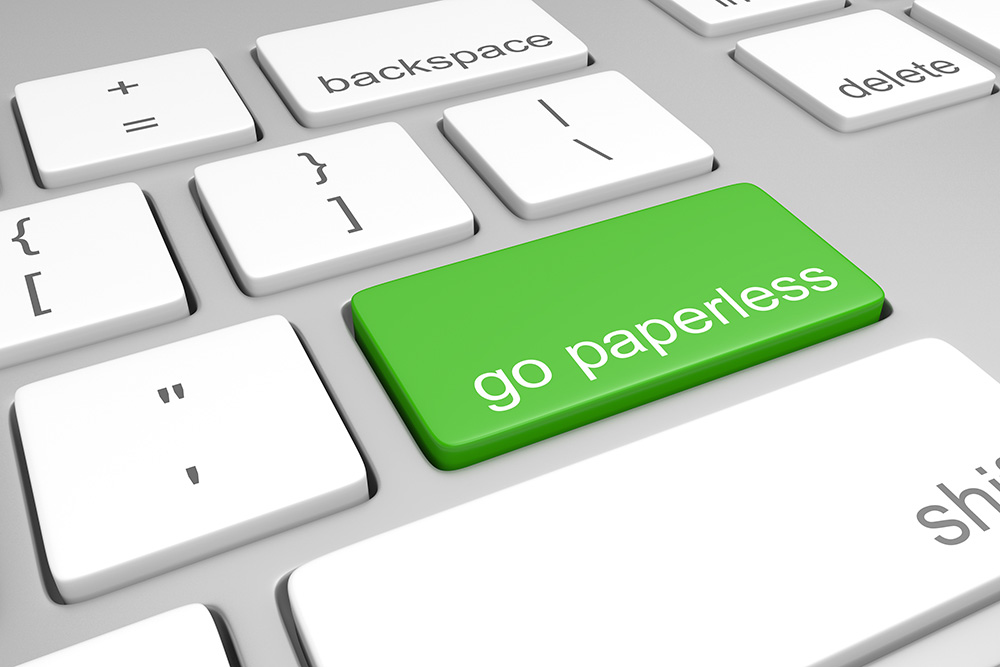
The concept of paperless classrooms has become idealized due to the uprising of technology. Since our students essentially have the world at their fingertips, is it illogical to believe that our classrooms will soon need no more print resources to teach future generations? Already there has been a shift away from physical textbooks to online versions, which often come with the added benefits. Online textbooks have led to online homework assignments, quizzes, and even standardized testing. While so many aspects of education have moved to be accessible online, I believe it will be impossible to convert to a completely paperless classroom. Further, I think our education system would suffer by forcing this shift from print to digital. 

Starting from a practical standpoint, to shift our classrooms to paperless would mean to shift students’ homes to paperless as well. While many homes are completely connected to the internet, there are just as many who do not have a reliable way to access a computer. It is unfair to constantly disadvantage them by requiring the use of a resource they don’t have. This certainly leads to a much larger discussion about the inequalities urban schools and their students face on a daily basis. Before schools can truly move to paperless classrooms, it would only be moral to ensure their students are capable of keeping up with this movement. The amount of funding that would go into transitioning to a paperless school is more than enough to scare Boards of Education, taxpayers, and anyone tasked with the job of developing that budget. 

However, let’s move away from the financial or social aspects of a paperless school. Assume our education system did not contain its current flaws and inequalities. Instead, I want to consider this question: Is a paperless classroom the best way to educate our students? Technology provides a unique advantage that students of previous generations are envious of. There is no doubt that technology has revolutionized education by opening millions of doors to educators and students in new ways of creative, innovative, and genuinely fun learning. Schools should absolutely take advantage of opportunities to involve laptops, iPads, clickers, and even cell phones to keep students engaged in lessons. Using online textbooks instead of carrying five different hardcovers all day long is a blessing to students. Creating online study guides, posting powerpoints, and submitting digital versions of assignments are all great ways to reduce paper waste while still providing quality education. But there is a limit where paperless changes from beneficial to harmful.

Requiring students and teachers to go paperless takes their choice of preference away from them. Just as some people favor visual versus verbal learning, some would choose physical textbooks over digital ones. Some people have issues staring at a screen for extended periods of time, resulting in eye strain and headaches. Others like to hold a physical copy of whatever they are reading in order to focus and absorb the information more effectively. On top of simple preference, there are numerous studies that prove writing down information is a crucial step to memorization. It’s been proven that typing down notes requires less mental work than writing, which leads to less retention of the notes. Perhaps as future generations grow up surrounded by more technology, there will be a shift in how the brain processes and stores information through typing. As of right now, I think that classrooms should still be cognizant of the difference between typing and writing and learn to differentiate when each is most effective. 

I think technology should absolutely start replacing print resources where they are no longer needed or beneficial. Schools should purchase online textbooks to allow students to use them both in and out of school where they would otherwise have to share class copies. Having students submit assignments online to reduce the usage of paper is a perfect way to minimize waste. Giving students the option to type or write their notes, based on their preferences, allows more flexibility for students to learn what works best for them. There is no doubt that technology can create classrooms that cater to twenty-first-century students by discovering more effective ways of learning and teaching. The focus on schools should not be to convert to completely paperless classrooms; rather, it should be on creating an environment that provides every opportunity for student success through whatever methods are most beneficial for each individual.

Technology’s Influence

Technology will not replace great teachers but technology in the hands of great teachers can be transformational.

George Couros

Technology continues to be a hot topic in education; every educator, student, parent, and stranger on the street has a passionate opinion. Yet, no matter any individuals’ thoughts, there is no denying that technology is a growing aspect of education. Some technology is so familiar it hardly counts: calculators, desktops, projector screens. But iPads, chromebooks, smartboards, and even in-class cell phone usage are tools that are gradually entering classrooms across the nation. Without a doubt, technology has had a strong impact on every student’s learning experience, both positively and negatively. 

I grew up in a technological explosion. I watched my classrooms transition from chalkboards to whiteboards, rolled in projectors to smart boards, and shared resource books to individual laptops. Every year, my district introduced another technological invention, leaving my teachers struggling to figure out how to connect touchpads to screens while at the mercy of twenty impatient middle schoolers. It was easy for my classmates and I to adjust to new technology as it became second nature to mess around with it until it started working. I learned how to Google any questions I had if my relentless changing of settings didn’t result in what I wanted. But most of my teachers were unsure how to effectively use the barrage of resources being thrown at them.

Personally, I enjoyed having so much technology to learn. I distinctly recall many assignments geared to teaching me how to use the internet to find academic sources. While most teachers still required us to use “old-school” methods occasionally, having the ability to skip through the tediousness of making photocopies of short sections from twelve different books, all for one paper, was much appreciated. I didn’t have to rely on outdated information or only trust one author’s opinion; we were expected to check our facts and quick confirmation was a saving grace. One of the best moments was when my teacher would announce we would be using clickers or playing a Kahoot to check our understanding. I cannot imagine what my education would have been like without the use of Powerpoint, Youtube, graphing calculators, and so many more essential tools in a twenty first century classroom. 

Even with my great appreciation for this technology, its flaws are equally evident. As I mentioned before, it can be difficult to find the best ways to implement ever-changing technology into certain classrooms. Not every teacher is properly trained in how to use the new tools which translates into confusing assignments, incorrect directions, and a feeling of stress when plans don’t work out for both students and teachers. There is the obvious cost of these resources; some schools allocating an exorbitant amount of budget to buying the newest improvements while other schools struggle to afford more than two computer labs. Another common issue is technological malfunctions. More dependency put onto technology means more reliability is absolutely essential for successful lesson plans and functioning classrooms. Some circumstances are out of students’ and teachers’ control, such as internet outages or Google Drive going down. While incredibly frustrating, there will always be some unavoidable difficulties when relying on technology. 

Technology’s benefits far outweigh its faults by providing innovative ways for teachers and students to connect to the modern world. I, along with millions of other students, will forever be grateful to have experienced this revolution of technology. English teachers may gripe about Sparknotes, but love the ability to have students create videos reenacting literatures greatest scenes. Math teachers refuse to allow students to use calculators to multiply but take advantage of the computer’s ability to graph functions in seconds. Science teachers can present videos of experiments they could never find the supplies to perform. Every teacher, when equipped with the right skills and knowledge, can make incredible and effective use of every new invention to keep students engaged and excited to learn. 

Design a site like this with WordPress.com
Get started